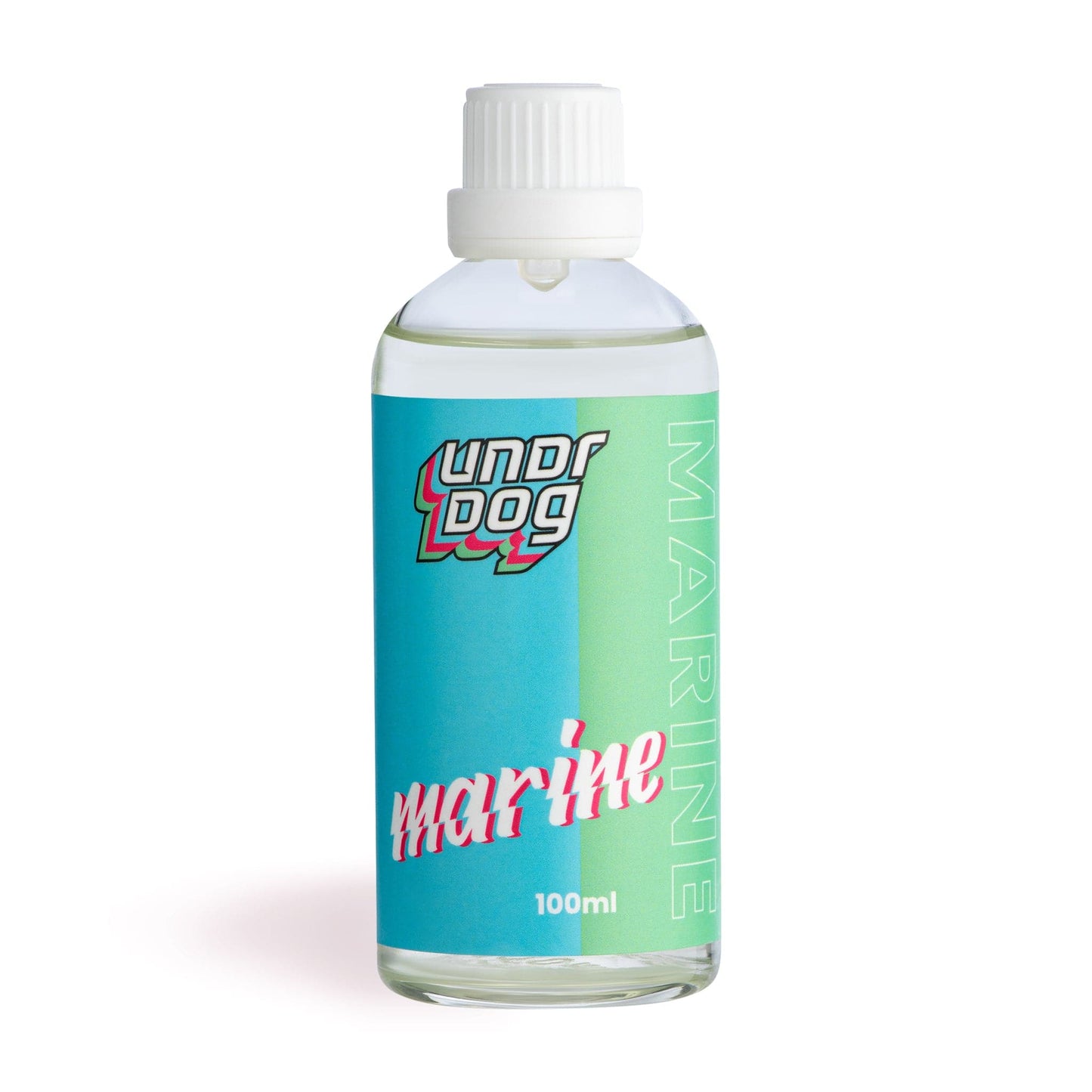


Undrdog Marine: Advanced Protection for Boats
Undrdog Marine: Advanced Protection for Boats
SKU:UNDM-100
54 in stock
Undrdog Marine — the PTFE-based coating for boats, gel coat, and saltwater life
The short version: Undrdog Marine is a PTFE-based protective coating engineered for the surfaces boats actually have — gel coat, aluminum, fiberglass, painted hulls, vinyl, and marine glass. It resists salt, sun, and oxidation, sheds water fast, and simplifies wash-down between trips. The chemistry is the same family that powers Undrdog Pro on cars, tuned for saltwater and UV.
Who it's for: Boat owners tired of yearly wax cycles and marine detailers who need a coating that installs consistently in humid, salt-loaded environments.
What Marine is engineered to handle
- Saltwater spray and residue — salt is one of the harshest oxidizers a hull faces daily.
- UV degradation — direct sun on a moored or trailered boat fades gel coat within a season without protection.
- Waterline scum and hard-water spotting — dissolved minerals in freshwater lakes and mineral-heavy dock water bake spots into gel coat.
- Oxidation on painted aluminum and fiberglass — the chalky white haze that turns dull surfaces even duller.
- Bird drop and insect fallout — acidic byproducts that etch unprotected finishes.
What's in the formula
Marine uses the same three functional ingredients as Undrdog Pro, tuned for marine exposure:
- Polytetrafluoroethylene (PTFE) — one of the lowest-friction solids known, with a dynamic coefficient of friction of roughly 0.04–0.08 (engineering reference tables). PTFE is what gives Marine its slick, easy-clean surface.
- Silicon-based binders — provide the crosslinking network that anchors the film to gel coat and painted surfaces.
- Paraffin — contributes gloss depth and helps the coating self-level during application.
Verified specs
- Flash time: Humidity- and temperature-dependent; typical marine environments produce a moderate flash window.
- Cure timeline: Dust- and tack-free in ~4 hours. Full chemical resistance in 5–7 days.
- Compatible surfaces: Gel coat, fiberglass, painted aluminum, marine glass, vinyl wraps, painted hulls.
- VOC compliance: Yes (U.S. and Canada).
Marine vs Marine Plus vs HCC — which do you actually need?
- Undrdog Marine — the standard PTFE-based marine coating. Wide install window, appropriate for owners doing their own wet-slip or trailer maintenance.
- Undrdog Marine Plus — professional-grade variant with elevated chemical-resistance targets and a single-layer application method for shop efficiency. See Marine Plus.
- HCC (Hybrid Ceramic Coating) — the all-surface flagship. Ceramic (SiO2) chemistry rather than PTFE-based. Use HCC if you want one coating that works across your car, boat, and other vehicles. See HCC.
How to apply Undrdog Marine
- Wash the hull thoroughly with a marine-specific soap. Rinse until sheeting is even.
- Decontaminate — clay or iron-remover any bonded contaminants. On oxidized gel coat, machine-polish first.
- Wipe down with a marine panel-prep solution to strip polishing oils.
- Apply Marine a section at a time with a coating applicator. Work in a cross-hatch pattern.
- Flash until the residue rainbows and just starts to feel tacky.
- Wipe off with a clean, plush microfiber. Turn or replace the towel every section.
- Cure the boat under cover for at least 24 hours. Avoid rain or launch during the first day.
Frequently asked questions
How long does Undrdog Marine last on a slipped boat?
Service life depends on prep, exposure, and wash chemistry — a hull that lives in direct sun with brackish water will need re-coating sooner than a covered trailered boat. Marine is engineered for multi-season service life on well-prepped gel coat with regular pH-neutral wash-downs.
Can I apply Marine over an existing wax or coating?
No. Strip all wax, sealant, and any failing coating before applying Marine.
Is Marine safe on painted aluminum and metal parts?
Yes. Prep the surface the same way you would prep gel coat — clean, decontaminate, wipe down.
Do I need to polish oxidized gel coat before coating?
Yes. Oxidation is the failed top layer of the gel coat. If you don't remove it, the coating bonds to a failing layer that will lift off. Polish first, then coat.
Can Marine be used on a wrapped boat?
Yes. Vinyl wraps benefit from Marine's hydrophobic behavior. Apply the same way you would to gel coat.
How much Marine do I need for a typical hull?
Coverage depends on hull size. Plan on enough for two applications' worth of hull area at a single-layer install; check the product page for volume options.
Does Marine work on the underwater sections of the hull?
No. Marine is designed for above-waterline gel coat, painted hulls, and topside surfaces. Below the waterline requires an antifouling paint, which is a different product category entirely.
Will Marine reduce how often I have to wax the boat?
Yes — that is the point. Boats coated with Marine typically go months to years between corrective work, versus a wax cycle that needs re-application every few weeks.
Referenced sources
- Engineering Toolbox — PTFE friction coefficients
- Polymers (2025) — hydrophobic contact angles for silica-family coatings
Packaging may not exactly match featured images.
Couldn't load pickup availability