
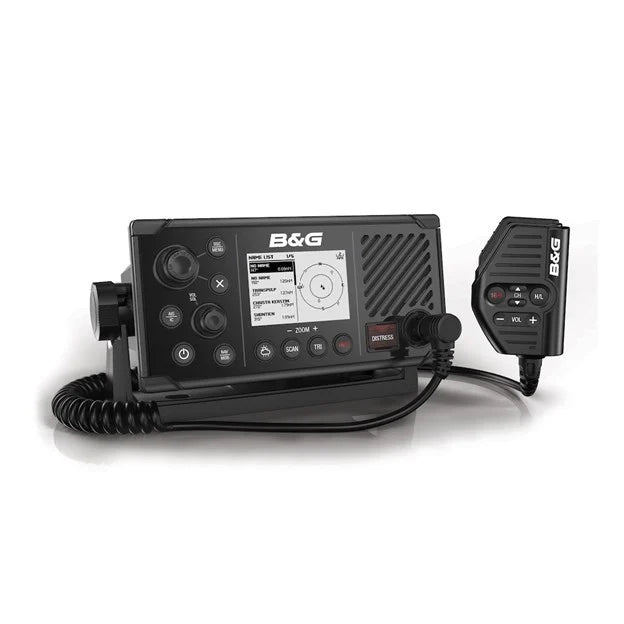
Unveiling the Secrets of Marine VHF Radios
Unveiling the Secrets of Marine VHF Radios: Your Lifeline at Sea
 Ahoy, new boaters! Welcome to the high seas of marine communication, where the lifeline of every mariner lies—Marine VHF Radios! Today, we embark on an exciting voyage to explore the secrets of Garmin, Standard Horizon, Uniden, and Icom radios, discovering how AIS, DSC, NMEA 2000, and Shakespeare Antennas play a pivotal role in keeping you safe and connected on your aquatic adventures. Get ready to set sail on a journey that's as entertaining as it is informative!
Marine VHF Radios - The Ocean's Communication Hub
Marine VHF Radios serve as the backbone of maritime communication, ensuring clear and reliable transmission of crucial information between vessels, harbors, and rescue services. They operate within the Very High Frequency (VHF) range, allowing for line-of-sight communication over relatively short distances at sea.
1. Garmin Marine VHF Radios: Sailing with Precision
Garmin offers a range of robust Marine VHF Radios designed for exceptional performance and reliability. These radios boast intuitive interfaces, making them easy for new boaters to operate.
AIS Integration with Garmin VHF Radios:
Automatic Identification System (AIS) is a vital safety feature that enables vessels to exchange crucial data, such as vessel name, position, speed, and course. Some Garmin VHF Radios have integrated AIS receivers, displaying AIS targets directly on the radio's screen. This enhances situational awareness, allowing you to identify nearby vessels and take appropriate action to avoid potential collisions.
DSC (Digital Selective Calling) - A Lifesaving Feature:
DSC is a revolutionary technology that enhances marine safety by allowing you to send distress calls and communicate directly with other DSC-equipped vessels or rescue services. With DSC, you can initiate a distress call with a single button press, automatically transmitting your vessel's MMSI (Maritime Mobile Service Identity) and GPS position to nearby vessels and the Coast Guard.
2. Standard Horizon Marine VHF Radios: The Horizon of Connectivity
Standard Horizon is synonymous with innovative communication solutions, offering a diverse range of Marine VHF Radios that cater to every boater's needs.
NMEA 2000 Network Connectivity:
NMEA 2000 is a standardized communication protocol that enables seamless data sharing between various marine electronics devices. Some Standard Horizon radios have NMEA 2000 connectivity, allowing them to integrate with other NMEA 2000-compatible devices on your vessel. This means you can display data from your GPS, AIS, depth sounder, and more, all on a single compatible chartplotter or multifunction display.
3. Uniden Marine VHF Radios: Communicate Fearlessly
Uniden is a leader in marine communication, known for its rugged and reliable Marine VHF Radios built to withstand the elements.
DSC Emergency Calling with NMEA 2000:
Uniden VHF Radios equipped with DSC can interface with NMEA 2000 devices, enhancing the accuracy and effectiveness of emergency calling. When a distress signal is activated, the radio can automatically relay vital information, such as your vessel's GPS position, to other NMEA 2000 devices connected to the network. This comprehensive communication ensures that rescue operations are swift and efficient.
4. Icom Marine VHF Radios: Setting Sail with Confidence
Icom's Marine VHF Radios are engineered for marine enthusiasts seeking top-notch performance and cutting-edge features.
Shakespeare Antennas - Reaching Far and Wide:
A crucial element in maximizing VHF communication range is the antenna. Shakespeare Antennas are renowned for their exceptional performance, enabling your VHF radio to transmit and receive signals effectively over long distances.
DSC and NMEA 2000 Integration:
Icom VHF Radios offer DSC capabilities, enabling you to send and receive distress calls with ease. Additionally, some Icom models can integrate with NMEA 2000 devices, ensuring seamless data exchange and enhancing the overall functionality of your marine electronics network.
How to decide?
Pro's and Con's of Garmin VHF Radios:
Pros:
- Precision and reliability in communication.
- Intuitive interfaces, user-friendly for new boaters.
- Integrated AIS receivers for enhanced situational awareness.
- DSC capability for swift distress calls and communication with other vessels and rescue services.
Cons:
- Higher price range compared to some other brands.
- Limited range of models available compared to other manufacturers.
Standard Horizon Marine VHF Radios:
Pros:
- Diverse range of models to cater to various boating needs.
- NMEA 2000 network connectivity for seamless data sharing with other compatible devices.
- Built to withstand harsh marine environments, ensuring durability.
- Easy-to-read displays and straightforward operation.
Cons:
- Some models may lack advanced features found in competitors' high-end radios.
- Bulkier designs compared to some sleeker models from other brands.
Uniden Marine VHF Radios:
Pros:
- Rugged and reliable radios built to withstand the elements.
- DSC capability for quick and efficient distress calling.
- Integration with NMEA 2000 devices for enhanced emergency calling and data sharing.
Cons:
- Limited range of models and features compared to other leading brands.
- May lack some advanced functionalities found in higher-priced options.
Icom Marine VHF Radios:
Pros:
- Top-notch performance and cutting-edge features for marine enthusiasts.
- DSC capability for efficient distress calling and communication.
- Integration with NMEA 2000 devices for seamless data exchange.
Cons:
- Higher price range compared to some other brands' offerings.
- Limited range of models compared to more extensive product lines from competitors.
Shakespeare Antennas:
Pros:
- Renowned for exceptional antenna performance, extending communication range.
- Wide range of antenna options available for different vessel types and needs.
- Durability and reliability, built to withstand marine conditions.
Cons:
- Standalone antennas; not a full communication system, requiring a compatible VHF radio for functionality.
- Antennas may be pricier compared to standard non-marine antennas.
Conclusion:
Marine VHF Radios are your lifeline at sea, ensuring seamless communication and safety on your nautical escapades. With AIS, DSC, NMEA 2000, and Shakespeare Antennas, these radios empower you with essential information, allowing you to navigate confidently and respond promptly to emergencies. So, set sail with the knowledge that your trusty VHF Radio will keep you connected, informed, and safe on every aquatic adventure. Bon voyage, and may the seas be ever favorable!